Dam Data

Dam storages play a central role in determining seasonal water availability and subsequent market conditions.
This page provides an overview of current levels across the major storages supplying the southern connected system.

Storage trends, inflows and release patterns can provide important signals for water availability and pricing throughout the irrigation season.

Chart-bar Chart-bar

Current Volume

Current storage volume (%)

Storage Movements

30 day change in storage volume

Gauge Gauge

Historical Comparison

Comparing current storage levels to recent history.

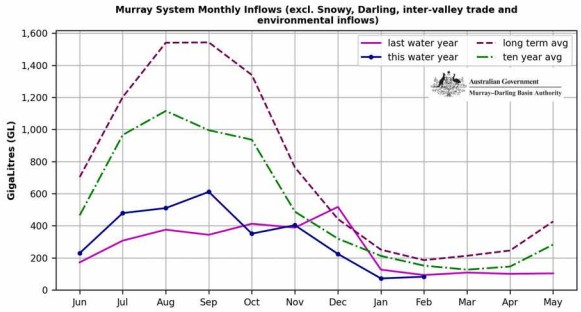
Murray System Monthly Inflows

The three water years prior to 2024-25 delivered exceptionally strong inflows across the Murray system, allowing storages to begin the season from a relatively strong position. However, inflow conditions during 2024–25 shifted sharply, ranking among the driest inflows on record and placing increasing reliance on stored water to support irrigation demand.

That tightening trend has continued into the current season. To the end of January 2026, Murray System monthly inflows (excluding Snowy contributions, Darling inflows, intervalley trade and environmental water) were tracking around 36% below average and approximately half of the long-term median.

Late summer rainfall across February and March has improved short-term conditions and reduced immediate pressure on the system. However, Murray storages remain in a relatively delicate position and will require further follow-up rainfall across currently wet catchments to materially strengthen the outlook heading into winter.

Dartmouth Dam

0

(% Full)

Hume Dam

0

(% Full)

MDBA Active Storage

0

30 Day Change

12 Months Ago

0
×

MDBA Active Storage

Last Updated April 7, 2026

Storage conditions can change quickly depending on rainfall, inflows and downstream demand.

Member Access

Deeper allocation modelling, detailed trade breakdowns and historical datasets available to members.

Murrumbidgee Storages

Storage levels across the Murrumbidgee River system remain under pressure, with the basin’s two major reservoirs sitting at historically low levels for this stage of the season. Combined storage across the two dams at the end of February represents the lowest level for that point in the season in more than a decade, highlighting the tightening supply position developing across the system.

Recent rainfall has provided some short-term relief across parts of the catchment, improving soil moisture and easing immediate irrigation demand. However, while this may help reduce near-term releases, meaningful system recovery will ultimately depend on sustained rainfall across the upper catchments capable of generating inflows into the major reservoirs.

Seasonal climate guidance continues to suggest a drier period developing through April to July, coinciding with the lead-up to the winter inflow season. With storages currently at reduced levels, the system remains particularly sensitive to rainfall outcomes over the coming months.

Follow-up rainfall across currently wet catchments would improve the likelihood of runoff and inflows. Without it, the Murrumbidgee system risks entering winter with storages still in a relatively constrained position.

0

Blowering Dam (% Full)

0

Burrinjuck Dam (% Full)

Combined Murrumbidgee

0

30 Day Change

Historical Comparison

© Copyright - The Basin Brain